A near miss on a manufacturing floor usually does not happen because nobody cared about safety. More often, it happens because the wrong glove was stocked, a spill kit was missing, a walkway marking had faded, or a face shield was available but not where the task was actually being done. That is why choosing the best safety supplies for manufacturing is not about buying more products. It is about matching the right supplies to the real risks your team faces every day.
For plant managers, operations leaders, and warehouse supervisors in Miami-Dade and Broward, the challenge is rarely finding a supplier that can ship a box. The harder part is building a safety supply program that holds up under heat, traffic, chemicals, production pressure, and turnover. Good purchasing decisions reduce injuries and downtime. Bad ones create waste, confusion, and exposure you could have avoided.
What the best safety supplies for manufacturing actually do
The best safety supplies for manufacturing help in three ways at once. First, they protect employees from specific hazards such as impact, chemical contact, cuts, noise, and airborne particles. Second, they make safe behavior easier by putting the right equipment where the work happens. Third, they support consistency, which matters just as much as the product itself.
That last point gets overlooked. A high-quality respirator does not help much if your team keeps running out of replacement cartridges. Floor signs do not do their job if they peel up in humid conditions. Safety eyewear becomes a wasted line item when workers reject it because it fogs or fits poorly. In manufacturing, the best supply is often the one your team will actually use correctly, every shift.
PPE should match the task, not the catalog
Personal protective equipment is usually the first category buyers think about, and for good reason. But PPE decisions should start with exposure, not price alone.
Hand protection
Gloves are one of the most common problem areas in manufacturing facilities. Some teams buy one glove style for every job and hope it covers everything. It rarely does. Cut-resistant gloves may be right for handling sharp metal or glass, but they are not automatically the best option for chemical handling. Nitrile disposable gloves work well in many applications, yet they are not a substitute for thicker chemical-resistant gloves when splash risks are higher.
Fit matters too. If gloves are too bulky, workers remove them to do precision tasks. If they tear easily, replacement use rises and costs climb. The right recommendation depends on what your team touches, how long they wear the glove, and whether dexterity is essential.
Eye and face protection
Safety glasses are standard in many plants, but not every environment needs the same style. Anti-fog lenses are especially useful in warm, humid facilities or operations that move between air-conditioned and hot production areas. Face shields add another layer when there is splash, grinding, or flying debris, but they generally work with safety glasses rather than replacing them.
Comfort is not a small issue here. Employees are much more likely to keep eye protection on when it fits well and stays clear.
Respiratory protection
Dust, mists, fumes, and vapors require more than a generic mask order. In some settings, disposable respirators may be enough. In others, reusable options with the correct cartridges make more sense for both protection and cost control. The wrong choice can create a false sense of security, which is worse than inconvenience.
This is also an area where training and product selection need to work together. If respirators are difficult to store, maintain, or replace, compliance drops.
Hearing protection
Manufacturing noise exposure adds up over time, so hearing protection should not be treated like an afterthought. Earplugs may be practical in one operation, while earmuffs work better in another, especially where workers need fast on-off use. The trade-off usually comes down to comfort, noise level, communication needs, and whether workers can wear them correctly throughout the shift.
Facility safety supplies matter just as much as wearable gear
A safe plant does not depend on PPE alone. The environment itself needs to help prevent injuries.
Safety signage and visual communication
Clear signs, labels, and floor markings guide traffic, warn about hazards, and reinforce procedures. In busy facilities, visual communication reduces hesitation and guesswork. This is particularly helpful in mixed-use areas where production, forklift traffic, storage, and pedestrian movement overlap.
The material matters. Lightweight indoor signage may fail quickly in high-moisture or high-contact areas. Floor tape can work well, but only if it is suited for the surface and traffic level. Painted markings may last longer in some plants, while tape is easier to update when layouts change. It depends on how fixed your workflow is.
Spill control and absorbents
Spill response supplies are among the best safety investments a manufacturing site can make because they affect both safety and uptime. Absorbent pads, socks, pillows, and spill kits help contain leaks before they spread into slip hazards or equipment problems.
Not every facility needs the same kit. A plant dealing with oils has different needs than one using corrosive chemicals or water-based fluids. The best approach is to place the right absorbents near actual risk points, not just in a central storage room nobody can reach quickly.
Traffic control and barrier products
In manufacturing and warehouse settings, vehicle-pedestrian interaction is a serious concern. Cones, barricade tape, stanchions, wheel chocks, and physical barriers help separate movement and control temporary hazards. These products are simple, but their value is high when docks are active, maintenance is underway, or aisles change during peak activity.
The mistake many facilities make is treating traffic control as temporary forever. If the same issue appears every week, you probably need a more durable solution.
Housekeeping supplies are safety supplies too
Manufacturing buyers sometimes separate janitorial purchasing from safety purchasing. On the floor, those categories overlap constantly.
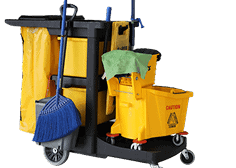
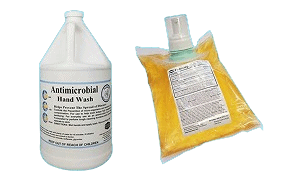
Wet surfaces, residue buildup, leaking containers, and poor restroom or hand hygiene all affect workplace safety. Entrance mats reduce slip risks at transition points. Trash liners help manage waste without tears or leaks. Hand soaps, sanitizers, and dispensers support hygiene and reduce contamination concerns in shared environments. Odor control and cleaning chemicals, when selected correctly, also support healthier work areas.
There is a practical point here. If the products are ineffective, your team uses more of them. If they are too harsh, surfaces break down or workers avoid using them. If dispensers are poorly placed or often empty, compliance drops. The right recommendation can reduce waste while improving safety, which is exactly the kind of operational win most managers are after.
How buyers should evaluate safety supply choices
The best buying decisions usually come from asking a few direct questions. What hazard is this product addressing? Will employees use it correctly and consistently? Does it hold up in this specific environment? Can we keep it stocked without constant substitutions? And does it support compliance rather than create more confusion?
Price still matters, of course. But cheapest upfront is not always cheapest in practice. Low-grade eyewear that gets scratched immediately, gloves that rip too often, or absorbents that fail during a real spill can cost more in replacement, cleanup time, and risk exposure than a better-fit product would have cost in the first place.
This is where a consultative supplier adds value. Instead of forcing a facility to sort through hundreds of SKUs alone, a knowledgeable partner helps narrow the field based on the work being done, the conditions on site, and the balance between durability and budget. That is especially useful for facilities managing multiple departments or trying to standardize safety products across locations.
Common mistakes when stocking safety supplies
One common mistake is overbuying based on general assumptions. Another is underbuying critical items because they seem secondary until an incident happens. Facilities also run into trouble when they stock products in a storage area far from the point of use. Availability affects behavior more than many purchasing teams realize.
Another issue is inconsistency. If glove types, signage styles, or spill response materials keep changing based on spot buys, teams stop trusting the system. Standardization improves training, reordering, and day-to-day use. It also helps supervisors notice when something is missing.
For South Florida facilities, environmental conditions deserve extra attention. Heat, humidity, moisture, and heavy traffic can shorten product life. That does not mean every facility needs the most expensive option. It means the recommendation should reflect the environment, not just the item description.
Building a smarter manufacturing safety supply program
If you want a stronger setup, start with the floor, not the spreadsheet. Look at where incidents, delays, leaks, and workarounds actually happen. Review which products workers avoid, which ones run out fastest, and which hazards rely too much on memory instead of visible controls.
From there, build around the essentials: task-matched PPE, clear signage, reliable spill control, practical traffic management, and housekeeping products that support safe operations. Keep the assortment disciplined. Too many overlapping items create confusion. Too few create gaps.
The best safety supplies for manufacturing are the ones that fit your process, your people, and your facility conditions well enough to become part of the routine. When that happens, safety stops feeling like guesswork and starts working the way it should – quietly, consistently, and every single shift.
Need help choosing the right supplies?
VICTOR FERIA helps Miami-Dade and Broward businesses choose the right janitorial, paper, hygiene, chemical, disinfectant, glove, and safety products.
Request a Free Supply ReviewRelated resources for Miami-Dade and Broward businesses
Facility Supply FAQ
What is included in a Free Supply Review?
A review of current products, usage, waste, safety needs, reorder issues, and product-fit recommendations.
Do you serve both Miami-Dade and Broward?
Yes. VICTOR FERIA serves businesses across Miami-Dade and Broward with janitorial, paper, hygiene, chemical, glove, and safety supply recommendations.
Can you help choose paper products, disinfectants, gloves, or safety supplies?
Yes. Recommendations are based on the facility, task, traffic level, staff needs, and budget.
How do I ask for help?
Use the Free Supply Review button or contact VICTOR FERIA through the Contact Us page.