A mislabeled spray bottle can create more trouble than a dirty floor. One employee mixes the wrong products, another skips gloves because the task seems routine, and suddenly you are dealing with irritation, damaged surfaces, or a reportable incident. Cleaning chemical safety training is what keeps everyday tasks from turning into avoidable safety problems.
For facility managers, warehouse operators, and commercial cleaning teams, chemical safety is not a side topic. It affects injury prevention, compliance, product performance, and labor efficiency all at once. The right training does more than tell employees to be careful. It gives them practical rules for how to handle, store, dilute, apply, and dispose of products correctly in the real environments they work in every day.
Why cleaning chemical safety training matters on the floor
Most chemical incidents do not happen because someone intended to take a shortcut. They happen because routines become automatic. A worker grabs a bottle without checking the label. A new team member is shown a task once but never taught why one disinfectant is safe for a restroom fixture and another is not. A supervisor assumes everyone understands dilution ratios, but the measuring station says otherwise.
That is why effective cleaning chemical safety training needs to be tied directly to job tasks. In offices, the risk may center on disinfectants, restroom chemicals, glass cleaners, and floor care products. In industrial spaces, teams may also be handling degreasers, absorbents, odor-control chemicals, or stronger sanitation products. The product categories change, but the pattern stays the same: when training is vague, use becomes inconsistent.
There is also a business cost to poor training that often gets overlooked. Overuse of chemicals raises supply spend. Incorrect dilution reduces product effectiveness. Surface damage leads to replacement costs. Injuries lead to downtime, paperwork, and employee frustration. Training is not just a safety measure. It is part of running a tighter operation.
What good cleaning chemical safety training should cover
A useful program starts with chemical identification. Employees should know what each product is for, what surfaces it can be used on, and what hazards it presents. That sounds basic, but many facilities still have bottles in secondary containers with handwritten labels, faded print, or no clear instructions. If a worker cannot identify the product with confidence, training is already falling short.
Teams also need to understand Safety Data Sheets and label language in a practical way. This does not mean turning every custodian or maintenance worker into a compliance specialist. It means teaching them how to find the information that matters most for their role: required PPE, first aid steps, storage guidance, dilution instructions, and incompatibilities.
Proper dilution deserves special attention. Concentrated chemicals are common because they save space and reduce shipping costs, but they only work safely when they are mixed correctly. Too weak, and the product may fail to clean or disinfect as intended. Too strong, and you may create respiratory irritation, surface damage, sticky residue, or unnecessary exposure for workers.
PPE training should be tied to the actual products being used, not handed out as a generic rule. Gloves may be enough for one product, while eye protection or aprons may be appropriate for another. Employees should know not only what to wear, but when to replace PPE, where it is stored, and what to do if the required protection is missing.
Storage and segregation matter just as much as application. Chemicals should be stored in original containers whenever possible, kept away from incompatible substances, and secured in areas that reduce accidental access. This becomes especially important in larger facilities where janitorial closets, dock areas, and maintenance rooms are shared by multiple departments.
Finally, every training program should cover spill response and exposure reporting. Workers need a simple process for what to do if a product leaks, splashes, or is used incorrectly. A fast, calm response is much more likely when teams have practiced the procedure before they need it.
Common gaps that put facilities at risk
One of the biggest mistakes is treating training as a one-time event during onboarding. New hires may get a quick walkthrough, sign a form, and then learn the rest from coworkers. That creates variation from shift to shift and site to site. If you manage multiple facilities, those small differences add up quickly.
Another common issue is assuming the chemical supplier and the training process are separate decisions. They are not. Product selection affects hazard level, dilution complexity, PPE requirements, dispenser setup, and storage needs. If you choose products without considering how your staff will actually use them, you make training harder than it needs to be.
Language and literacy can also affect outcomes. In many South Florida facilities, workforces are bilingual or multilingual. Training that only exists in one format or one language may check a box without truly improving behavior. Clear labels, visual cues, and hands-on demonstrations often matter just as much as written instructions.
There is also a difference between compliance training and usable training. A binder on a shelf may satisfy a document request, but it does not help the night crew dilute floor cleaner properly at 11 p.m. The goal is not to overwhelm employees with technical detail. The goal is to make safe choices easier in the moment.
How to make training stick in real operations
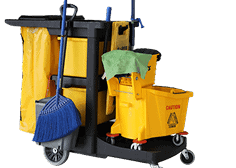
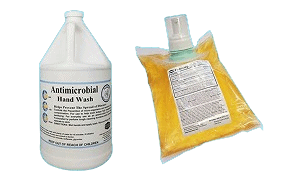
The most effective approach is to connect training to the products and tasks your team already handles. Instead of broad lectures, walk through the actual disinfectants, restroom cleaners, degreasers, and hand-care products used in your building. Show employees the dispensing equipment, the PPE station, the storage room, and the labels they will see during a normal shift.
Supervisors should reinforce key points in short intervals. Five-minute refreshers before a shift can be more useful than a long annual session that everyone forgets. When a product changes, a dispenser is replaced, or a team takes on a new area, that is the right time for focused retraining.
Consistency also improves when facilities reduce unnecessary variation. Too many overlapping products can confuse employees and increase misuse. Standardizing approved chemicals by task and location makes training simpler, purchasing more predictable, and results easier to monitor.
This is where a hands-on supply partner can add real value. A distributor that helps match products to your facility, install dispensers correctly, and review ongoing use can support safer operations from the start. In practice, that often means fewer workarounds, less guesswork, and a clearer path to compliance.
Compliance matters, but practicality matters too
Regulatory expectations are a real concern, especially for businesses managing public-facing spaces, industrial sites, or larger cleaning staffs. Training should support hazard communication requirements, proper labeling, access to Safety Data Sheets, and safe handling procedures. But checking those boxes is only part of the job.
What matters day to day is whether your team can work safely without slowing down operations. Sometimes the best answer is not adding more rules. It is choosing easier-to-use products, clearer dispenser systems, better labeling, or simpler storage layouts. Safety improves when the process makes sense.
For example, ready-to-use chemicals may cost more per bottle than concentrates, but they can reduce mixing errors in smaller facilities or lower-volume applications. On the other hand, concentrated systems can deliver strong cost control in high-traffic environments when staff are trained and dispensing equipment is set up properly. It depends on the site, the team, and the workload.
Building a safer chemical program over time
Strong cleaning chemical safety training is not a single meeting. It is a working system made up of the right products, the right instructions, and the right follow-up. If any one of those pieces is weak, the rest of the program becomes harder to manage.
A practical starting point is to review the chemicals currently in use, compare them against the tasks being performed, and identify where confusion shows up most often. That might be in dilution, PPE use, storage, or secondary labeling. Once those pressure points are clear, training can be updated to solve actual problems instead of repeating generic advice.
For businesses in Miami-Dade, Broward, and other high-traffic South Florida service environments, that kind of practical review can make a noticeable difference. Teams move faster when products are matched to the job and employees trust the process they have been taught.
The best training does not make chemical use feel complicated. It makes safe work feel normal, repeatable, and well supported.
Need help choosing the right supplies?
VICTOR FERIA helps Miami-Dade and Broward businesses choose the right janitorial, paper, hygiene, chemical, disinfectant, glove, and safety products.
Request a Free Supply ReviewRelated resources for Miami-Dade and Broward businesses
Facility Supply FAQ
What is included in a Free Supply Review?
A review of current products, usage, waste, safety needs, reorder issues, and product-fit recommendations.
Do you serve both Miami-Dade and Broward?
Yes. VICTOR FERIA serves businesses across Miami-Dade and Broward with janitorial, paper, hygiene, chemical, glove, and safety supply recommendations.
Can you help choose paper products, disinfectants, gloves, or safety supplies?
Yes. Recommendations are based on the facility, task, traffic level, staff needs, and budget.
How do I ask for help?
Use the Free Supply Review button or contact VICTOR FERIA through the Contact Us page.