A full restroom can expose every weakness in your soap program fast. If dispensers drip, clog, run empty too soon, or leave a mess on the counter, staff and visitors notice. When business buyers compare foam soap vs liquid soap, the right answer usually comes down to traffic level, dispenser setup, handwashing expectations, and how much waste your facility can tolerate.
For office managers, cleaning companies, medical offices, restaurants, and warehouse operators in Miami-Dade and Broward, this is not a small purchasing decision. Soap affects user satisfaction, refill frequency, housekeeping time, and total operating cost. It also affects whether employees actually wash their hands properly, which matters in every shared environment.
Foam soap vs liquid soap: what changes in real use?
On paper, both products do the same job. They help remove soil, grease, and microbes when users wash hands correctly with water and friction. The difference is how they are dispensed, how people perceive them, and how consistently they perform in a busy facility.
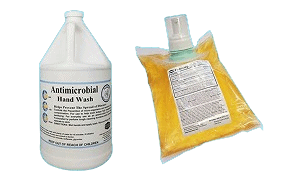
Foam soap is mixed with air at the dispenser, so users get a light lather immediately. That often feels cleaner and easier to spread across the hands. In office buildings, schools, and many commercial restrooms, that user experience matters because people want a quick, clean wash without extra mess.
Liquid soap comes out as a gel or viscous liquid and lathers after rubbing with water. In some settings, that heavier feel gives users more confidence, especially when hands are visibly dirty or greasy. In industrial, back-of-house, or foodservice areas, that perception can matter just as much as the chemistry.
The practical question is not which format sounds better. It is which one works better for your sinks, your users, and your maintenance routine.
Where foam soap makes the most sense
Foam soap is often the better fit when appearance, ease of use, and consumption control are priorities. Because each push dispenses a measured amount of product in a pre-lathered form, many facilities see less overuse. That can reduce refill frequency and cut down on soap residue around the sink.
In office environments, property-managed buildings, and professional waiting areas, foam soap usually creates a cleaner presentation. Counters stay neater. Users are less likely to pump out more than they need. Janitorial teams spend less time wiping dried soap from dispensers and vanity tops.
Medical and dental offices often prefer foam soap for similar reasons. Staff and patients tend to like the fast spread and easy rinse. In environments where handwashing happens constantly, small efficiencies add up over the course of a day.
Foam can also be a smart choice in restrooms used by the public. If you manage a church, school, or multi-tenant building, controlling waste matters. A well-matched foam dispenser and refill system can help keep usage more predictable.
That said, foam soap is not automatically the low-cost winner. The dispenser matters. The refill system matters. And the soap formula matters. A cheap dispenser paired with poor-quality refills can turn a good idea into a maintenance problem.
The main advantages of foam soap
Foam soap generally offers better portion control, a lighter feel on the hands, and a cleaner-looking sink area. It can also reduce the impression of product waste because users see immediate lather without pressing multiple times.
For facilities trying to improve restroom appearance while keeping labor under control, those are real benefits.
Where liquid soap still wins
Liquid soap remains a strong option for many commercial environments, especially where hands are heavily soiled. In restaurants, warehouses, workshops, and certain maintenance areas, employees may expect a denser soap that feels more substantial during washing.
That expectation should not be dismissed. Hand hygiene works best when people trust the product enough to use it properly. If your team deals with grease, dust, food residue, or other visible soils, liquid soap may align better with how they already wash their hands.
Liquid soap also makes sense when a facility already has compatible dispensers in place and they are performing well. Replacing an entire dispenser program just to switch formats is not always the smartest move. Sometimes the best decision is to improve refill quality and service rather than change systems.
Another point in liquid soap’s favor is product variety. Depending on the application, there may be more options for antimicrobial formulas, specialty hand cleansers, or industrial-grade soaps in liquid form. For some operations, that flexibility matters more than the appearance of the sink.
The main advantages of liquid soap
Liquid soap often feels stronger to users, gives access to more specialty formulas, and can be the better match for environments with heavier soils. In the right setting, it is dependable and familiar.
The trade-off is that it can be easier to over-dispense. More product on the counter usually means more cleanup for staff.
Cost is not just the price per refill
This is where many purchasing decisions go off track. Buyers compare unit price and stop there. Real soap cost includes how much is used per handwash, how often staff refill dispensers, how much product gets wasted, and how much housekeeping time goes into cleaning up leaks and residue.
Foam soap often looks more expensive per refill if you compare containers side by side. But because users typically dispense less product, the cost per handwash can be competitive or lower. In a high-traffic office restroom, that can make a noticeable difference over time.
Liquid soap may have a lower refill cost, but if users pump it two or three times out of habit, actual consumption can climb quickly. If dispensers drip or clog, the hidden cost increases again through labor and wasted product.
For Miami-Dade and Broward facilities managing multiple restrooms or multiple sites, consistency matters as much as price. A soap program that performs the same way across locations is easier to budget, easier to train around, and easier to keep stocked.
Dispensers can make or break the decision
Many soap problems are really dispenser problems. A good soap in the wrong dispenser can frustrate users, increase waste, and create extra work for custodial staff.
If you are comparing foam soap vs liquid soap, start with your current setup. Are your dispensers durable? Are refill cartridges easy to replace? Do they hold up in high-traffic restrooms? Are they locked, tamper-resistant, and consistent across the building?
Bulk-fill systems may appear economical, but they can create sanitation concerns and inconsistent performance if not maintained carefully. Sealed refill systems usually provide better hygiene control and more reliable dispensing. That matters in medical offices, foodservice settings, and any facility where cleanliness standards are closely watched.
This is also where guidance matters. The right recommendation is usually tied to your traffic, sink layout, refill access, and maintenance capacity, not just the soap itself. That is why many businesses work better with a supplier who looks at the full system rather than just dropping off cases.
What about hygiene and handwashing effectiveness?
For normal handwashing, foam and liquid soap can both be effective when the product is appropriate and users wash correctly. The bigger issue is behavior. People need enough time, enough friction, and proper rinsing.
Foam soap can encourage use because it feels quick and pleasant. Liquid soap can encourage confidence when hands feel truly dirty. Neither format fixes poor handwashing habits by itself.
In healthcare-adjacent settings, foodservice operations, and facilities with stricter sanitation expectations, formula selection matters more than format alone. Fragrance, skin sensitivity, antimicrobial requirements, and frequency of use all deserve attention. If staff wash hands dozens of times a shift, harsh soap can create compliance problems because irritated skin leads to avoidance.
So which one should your business choose?
If your facility prioritizes restroom appearance, reduced mess, and controlled usage, foam soap is often the smarter choice. It works especially well in office buildings, professional spaces, schools, and many public-facing environments.
If your teams handle heavier soils, expect a denser product, or need specialty hand-cleaning options, liquid soap may be the better fit. It can also make sense when your current dispensers are already reliable and replacing them would add cost without enough benefit.
For many buyers, the right answer is not one format for the entire company. A front-office restroom may perform better with foam, while a warehouse breakroom or maintenance sink may need liquid. Matching soap type to actual use is usually more efficient than forcing one product into every space.
That is the practical difference between buying soap and building a soap program. A good recommendation considers dispenser performance, user behavior, traffic, refill logistics, and total cost over time. Victor Feria works with businesses that want that kind of clarity, especially when the goal is less waste, fewer service issues, and no more trial-and-error ordering.
The best soap choice is the one your people will use correctly, your staff can maintain easily, and your budget can support month after month.
Need help choosing the right supplies?
VICTOR FERIA helps Miami-Dade and Broward businesses choose the right janitorial, paper, hygiene, chemical, disinfectant, glove, and safety products.
Request a Free Supply ReviewRelated resources for Miami-Dade and Broward businesses
Facility Supply FAQ
What is included in a Free Supply Review?
A review of current products, usage, waste, safety needs, reorder issues, and product-fit recommendations.
Do you serve both Miami-Dade and Broward?
Yes. VICTOR FERIA serves businesses across Miami-Dade and Broward with janitorial, paper, hygiene, chemical, glove, and safety supply recommendations.
Can you help choose paper products, disinfectants, gloves, or safety supplies?
Yes. Recommendations are based on the facility, task, traffic level, staff needs, and budget.
How do I ask for help?
Use the Free Supply Review button or contact VICTOR FERIA through the Contact Us page.