A warehouse can look busy and productive while sanitation problems build quietly in the background. Dust collects on racks, spills get handled with the wrong absorbent, restrooms run short on soap, and breakrooms become a weak point for cross-contamination. If you are responsible for operations in Miami-Dade or Broward, knowing how to improve warehouse sanitation is not just about appearance. It affects safety, uptime, employee confidence, pest control, and compliance.
The challenge is that warehouses are not cleaned like offices or retail spaces. They have traffic patterns, loading activity, packaging waste, forklift exhaust residue, and shared touchpoints that create a very different sanitation profile. A plan that works in a small commercial suite usually falls apart in a high-movement facility.
How to improve warehouse sanitation starts with zoning
The fastest way to lose control of sanitation is to treat the whole building as one cleaning environment. Warehouses need zones, because not every area carries the same risk or requires the same chemistry, tools, or frequency.
Receiving and loading zones usually need aggressive attention to dirt, stretch wrap scraps, pallet debris, and leaks from incoming goods. Storage aisles may appear cleaner, but overhead dust and settled particles can spread into inventory and equipment. Restrooms and breakrooms need infection-conscious cleaning, reliable hand hygiene supplies, and regular restocking. Offices inside the warehouse often need a lighter touch, but they still share doors, counters, and common surfaces with the production floor.
When these zones are defined clearly, sanitation becomes easier to schedule and easier to measure. Your team can assign the right product to the right surface instead of overusing one chemical everywhere. That reduces waste and lowers the chance of surface damage or ineffective cleaning.
Build a schedule around risk, not guesswork
Many warehouse sanitation routines are based on habit. Someone sweeps at the end of the shift. Restrooms get checked when there is time. A spill gets handled by whoever is nearby. That approach works until volume increases, staffing changes, or an audit exposes the gaps.
A better system ties frequency to risk. High-touch and high-traffic areas need daily or even multiple daily checks. Spill-prone zones need immediate response protocols. Low-traffic storage sections may need less frequent surface cleaning but more scheduled dust control. The point is to match labor and supplies to what actually happens in the building.
This is where a practical walkthrough matters. A facility manager may assume the main sanitation problem is the warehouse floor, while the bigger issue is empty soap dispensers at shift change or dirty door handles at shared entry points. Looking at traffic flow, shift timing, and material handling patterns usually reveals where sanitation breaks down first.
For many South Florida facilities, humidity also changes the equation. Moisture can worsen odor, support microbial growth in neglected areas, and make mop heads, cloths, or absorbent materials less effective if they are stored poorly. Schedules should account for local conditions, not just square footage.
Choose products by task, not by habit
One of the most common sanitation mistakes in warehouses is using familiar products for every job. A degreaser is not a disinfectant. A restroom cleaner is not the best choice for food-contact breakroom surfaces unless the label supports that use. A basic trash liner may fail in a heavy industrial waste stream and create more cleanup work than it saves.
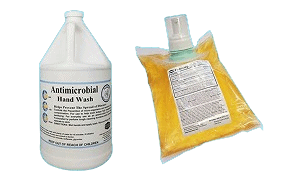
If you want to improve warehouse sanitation, product selection has to be more disciplined. Floors may need different treatment depending on whether the issue is dust, tracked-in soil, grease, or liquid spills. Shared surfaces need cleaners or disinfectants suited to the material and the exposure risk. Hand hygiene stations need soap and sanitizer systems that are easy to maintain and hard to misuse.
There is also a cost issue here that buyers feel quickly. Cheaper products often lead to overuse, repeat cleaning, or damaged dispensers and surfaces. More expensive products are not always the answer either. The right product is the one that performs consistently in your facility, with your staff, at a sensible use rate. That is why consultative guidance matters more than buying by label claims alone.
Pay attention to the tools behind the process
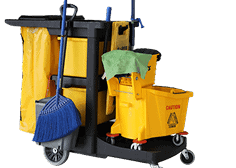
Good sanitation programs fail all the time because the supporting tools are wrong. Worn mop heads spread dirty water. Poor-quality paper products drive overconsumption. Inconvenient dispenser placement leads to skipped handwashing. Open trash receptacles invite odor and contamination issues.
The fix is not glamorous, but it is effective. Standardize dispensers where possible. Place them where people already stop, not where you wish they would stop. Use mats at entrances and transition points to cut down on tracked-in soil. Make sure spill kits fit the actual hazards on site. Keep color-coded tools if your facility has separate sanitation standards for restrooms, breakrooms, and warehouse areas.
These details shape behavior. If employees have to search for a sanitizer station, use the wrong rag, or work around a broken dispenser, sanitation becomes inconsistent. Small friction points create large sanitation problems over time.
Train for consistency, not just compliance
A warehouse sanitation plan is only as strong as the people carrying it out. That sounds obvious, but many facilities still rely on verbal instructions and assumptions. New hires copy whoever trained them, and shortcuts become standard practice.
Training should be simple, visual, and tied to the workday. Staff need to know what to clean, when to clean it, what product to use, how much to use, and what to do when conditions change. They also need to understand why certain areas are handled differently. People are more consistent when the reasoning is clear.
This is especially important in mixed-use facilities where office staff, warehouse associates, cleaning crews, and supervisors all influence sanitation outcomes. A spill response may involve one team, restroom restocking another, and ordering decisions someone in administration. If no one owns the full process, sanitation turns reactive.
The best programs assign responsibility clearly without making sanitation feel like a punishment detail. It is part of operational control. In many buildings, a short refresher every quarter does more good than a long annual meeting that nobody remembers.
How to improve warehouse sanitation without overspending
Better sanitation does not always mean adding labor hours or buying premium products across the board. Often, the biggest savings come from removing waste in the system.
Overdispensing chemicals is one form of waste. So is using restroom paper that runs out too fast, liners that tear early, or absorbents that do not match the spill type. Unplanned emergency purchases are another hidden cost, especially when managers are forced to buy whatever is available at the last minute.
A smarter approach is to look at usage patterns and failure points. Which consumables run out first? Where do leaks, odors, or complaints show up repeatedly? Which products get substituted because the original choice was impractical? Once you know that, you can tighten the program without making it harder for the team.
For warehouses in Miami and nearby industrial corridors like Doral and Hialeah, consistency in supply matters almost as much as the product itself. When core sanitation items are out of stock or changed too often, training slips and results become uneven. That is why many operations managers prefer working with a supplier that gives recommendations, installation help, and follow-up instead of simply dropping off boxes.
Measure what people actually notice
Sanitation is not only about audit checklists. It is also about whether the building feels controlled. Employees notice overflowing trash, dirty restrooms, empty soap dispensers, and sticky shared surfaces long before management sees a formal issue. Visitors and inspectors do the same.
So measure visible outcomes alongside internal tasks. Are restrooms stocked through every shift? Are breakrooms staying odor-free? Are aisles free of debris at transition times? Are spills documented and resolved with the right materials? These signals tell you whether your program is working in real conditions.
If problems keep returning, the answer is usually not more effort. It is usually a mismatch between the environment, the product, and the process. That is where an experienced supply partner can help identify whether the issue is chemistry, placement, training, or frequency.
Warehouse sanitation gets better when the plan fits the building, the crew, and the pace of the operation. Start there, and the improvements tend to show up everywhere else – fewer interruptions, better safety habits, and a facility that feels ready for the next shift instead of recovering from the last one.
Need help choosing the right supplies?
VICTOR FERIA helps Miami-Dade and Broward businesses choose the right janitorial, paper, hygiene, chemical, disinfectant, glove, and safety products.
Request a Free Supply ReviewRelated resources for Miami-Dade and Broward businesses
Facility Supply FAQ
What is included in a Free Supply Review?
A review of current products, usage, waste, safety needs, reorder issues, and product-fit recommendations.
Do you serve both Miami-Dade and Broward?
Yes. VICTOR FERIA serves businesses across Miami-Dade and Broward with janitorial, paper, hygiene, chemical, glove, and safety supply recommendations.
Can you help choose paper products, disinfectants, gloves, or safety supplies?
Yes. Recommendations are based on the facility, task, traffic level, staff needs, and budget.
How do I ask for help?
Use the Free Supply Review button or contact VICTOR FERIA through the Contact Us page.