A missed spill near a loading dock can turn into more than a housekeeping issue by the next shift. It can lead to slip hazards, pest activity, damaged inventory, failed inspections, and preventable downtime. That is why a warehouse sanitation checklist is not just a cleaning document. It is an operating tool that helps protect people, product, and productivity.
In warehouse environments, sanitation has to work around movement, storage density, equipment traffic, and tight schedules. A plan that looks fine on paper can fall apart quickly if it ignores forklift routes, shared touchpoints, break areas, or the way dust collects on racks and vents. The best checklist is specific enough to guide daily execution and flexible enough to match your operation.
What a warehouse sanitation checklist should actually cover
A useful warehouse sanitation checklist should divide cleaning by area, frequency, and responsibility. If those three elements are vague, tasks get skipped or duplicated. One team assumes the other handled it, and small sanitation issues start to spread.
At a minimum, the checklist should address floors, docks, storage areas, restrooms, breakrooms, offices, and high-touch surfaces. In many facilities, it should also include battery charging stations, waste collection points, receiving areas, mezzanines, and any location where leaks, food residue, cardboard dust, or standing moisture tend to build up.
This is also where many facilities need to separate cleaning from sanitizing and disinfecting. Those words are often used loosely, but they do not mean the same thing. Cleaning removes soil and debris. Sanitizing reduces bacteria to acceptable levels on appropriate surfaces. Disinfecting is typically reserved for surfaces where a higher level of microbial control is required. In a warehouse, using the wrong product can waste money, create residue, or fall short of the result you need.
Daily sanitation priorities in a working warehouse
Daily tasks should focus on what affects immediate safety and visible cleanliness. Floors are usually first. Dust, shrink wrap scraps, spilled powders, broken pallets, and liquid leaks need fast attention because they create hazards and spread through traffic.
Entrances and loading docks also deserve daily review. These areas bring in dirt, moisture, and contaminants from outside, especially during wet weather or high shipping volume. Entrance matting helps, but mats only work if they are cleaned and replaced on schedule.
High-touch points should be part of the daily routine, especially in multi-shift operations. That includes door handles, time clocks, breakroom tables, shared desks, handrails, touch screens, and forklift contact points if equipment is shared. The right approach depends on traffic volume and workforce size. A facility with limited staff and controlled access will need a different schedule than a fast-moving distribution center.
Trash removal matters more than many teams expect. Overflowing containers invite odors, pests, and cross-contamination. The checklist should note where liners are changed, who removes waste, and how often exterior disposal areas are inspected. If cardboard and general waste are mixed carelessly, cleanup gets slower and sanitation slips.
Weekly and monthly tasks that prevent bigger problems
If daily cleaning handles the obvious, weekly and monthly sanitation work handles what can quietly become expensive. Dust accumulation on racks, ledges, vents, light fixtures, and overhead structures is one of the most common examples. It affects appearance, air quality, and in some operations, fire risk.
Storage areas should be reviewed for damaged packaging, leaking containers, expired materials, and debris trapped behind pallets or under shelving. These are easy to miss during routine picking and staging, but they can attract pests or compromise stock.
Restrooms and breakrooms need deeper attention on a scheduled basis, not just surface cleaning. Grout lines, drains, dispensers, partitions, and corners collect buildup that does not always show up during quick daily service. A warehouse may be judged by its production floor, but employee support areas are often where sanitation standards become obvious.
Monthly tasks may also include wall washing in select areas, drain treatment, odor-control review, and dispenser checks. In some facilities, it is worth documenting chemical dilution systems and confirming they are working correctly. Too much chemical drives up cost and can damage surfaces. Too little can leave soils behind and reduce effectiveness.
Building your checklist by zone, not by guesswork
One reason sanitation programs fail is that the checklist is too generic. A better approach is to build the warehouse sanitation checklist around zones. This makes responsibilities easier to assign and easier to verify.
Your receiving and dock zone may need constant debris removal, spill response materials, and weather-related floor control. Storage aisles may need dust management, pallet debris removal, and rack-base cleaning. Offices may need a lighter schedule but more attention to touchpoints. Breakrooms and restrooms need a separate set of products, procedures, and refill checks.
This zoning approach also helps with staffing. Not every area requires the same product, tool, or frequency. That matters when managers are trying to control labor and supply costs. Overcleaning low-risk areas wastes resources. Under-cleaning high-risk zones creates safety and compliance problems.
Supplies and tools make a difference
A checklist only works if staff have the right materials when they need them. Facilities often lose consistency because products are scattered, unlabeled, or substituted without clear guidance. That usually leads to poor results, damaged surfaces, or incomplete sanitation.
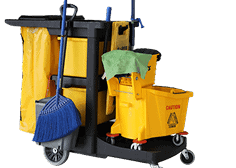
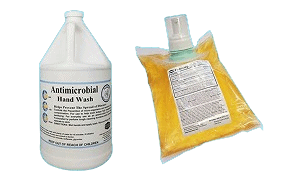
At the warehouse level, the essentials usually include dust mops, wet mops or autoscrubber support tools, microfiber cloths, trash liners, restroom paper products, hand soaps, sanitizers, disinfectants for approved surfaces, absorbents for spills, caution signage, and odor-control solutions where needed. In some operations, color-coded tools help reduce cross-use between restrooms, break areas, and general warehouse surfaces.
Chemical choice should match the surface and the soil. Grease near maintenance areas, food residue in breakrooms, and general warehouse dust do not call for the same product. This is where many buyers benefit from supplier guidance instead of trial and error. A product that performs well in an office may not hold up in an industrial setting with heavy traffic and varied contaminants.
Compliance, documentation, and real accountability
Clean-looking facilities are not always well-managed facilities. If a sanitation process is not documented, it becomes harder to prove consistency, train new staff, or respond to complaints and inspections.
Your checklist should show the task, the frequency, the responsible party, and a simple sign-off method. That can be digital or paper-based. What matters is that supervisors can verify completion and spot recurring gaps. If the same issue keeps showing up in one area, the problem may be staffing, supply access, scheduling, or checklist design rather than effort.
It also helps to connect sanitation records with safety practices. For example, if spill response supplies are consistently missing from certain zones, that is both a sanitation issue and a safety issue. If restrooms run out of soap or paper products, the problem is not just inconvenience. It affects hygiene expectations across the facility.
For warehouse operators in South Florida, humidity adds another layer. Moisture control, odor management, and more frequent monitoring near entrances and docks can be especially important during wet seasons. Conditions like that should shape the checklist instead of being treated as exceptions.
A practical warehouse sanitation checklist framework
If you are updating your process, a simple structure works best. Organize the checklist into daily, weekly, and monthly tasks, then assign each task by zone. Include a short note for approved products and tools where confusion is likely. Finally, review the checklist after actual use, because the first version rarely matches how the warehouse really runs.
A strong framework usually includes floor and spill control, touchpoint cleaning, waste handling, restroom and breakroom servicing, dock and entrance upkeep, storage area inspections, overhead dust management, and refill checks for soap, sanitizer, paper, and liners. If your operation handles food products, chemicals, or sensitive inventory, the checklist should be more detailed and may need tighter controls.
This is also a good place to involve the people doing the work. Supervisors may design the process, but floor teams usually know where debris builds up, which dispensers empty too fast, and which tasks are unrealistic during peak hours. That input makes the checklist more usable and more likely to stick.
When outside support makes sense
Some warehouses can handle sanitation entirely in-house. Others do better with outside support for product selection, dispenser setup, refill planning, and periodic review. That is especially true when a facility is growing, managing multiple sites, or dealing with recurring issues like odors, inconsistent product use, or supply shortages.
A consultative supply partner can help narrow down what is actually needed instead of overspending on overlapping products. That practical guidance is often where facilities save the most time. Companies like Victor Feria work with warehouses and commercial facilities that need dependable supplies, installation support, and straightforward recommendations that fit daily operations.
A warehouse stays cleaner when sanitation is treated as part of operations, not as an afterthought once the shift slows down. The right checklist gives your team a standard they can follow and a system you can trust when the building is busy, the schedule is tight, and there is no room for avoidable problems.
Need help choosing the right supplies?
VICTOR FERIA helps Miami-Dade and Broward businesses choose the right janitorial, paper, hygiene, chemical, disinfectant, glove, and safety products.
Request a Free Supply ReviewRelated resources for Miami-Dade and Broward businesses
Facility Supply FAQ
What is included in a Free Supply Review?
A review of current products, usage, waste, safety needs, reorder issues, and product-fit recommendations.
Do you serve both Miami-Dade and Broward?
Yes. VICTOR FERIA serves businesses across Miami-Dade and Broward with janitorial, paper, hygiene, chemical, glove, and safety supply recommendations.
Can you help choose paper products, disinfectants, gloves, or safety supplies?
Yes. Recommendations are based on the facility, task, traffic level, staff needs, and budget.
How do I ask for help?
Use the Free Supply Review button or contact VICTOR FERIA through the Contact Us page.