A cleaning crew can have the right people and a solid schedule, yet still lose time and quality because the supply closet is poorly planned. When Miami facility managers ask, “what supplies do cleaning companies need,” the answer is not simply disinfectant and paper towels. It is a dependable system of products that match the building, the traffic level, the surfaces being cleaned, and South Florida’s heat and humidity.
For an office, warehouse, hotel, restaurant, or multi-tenant property, the goal is to keep restrooms stocked, floors safe, odors controlled, and staff protected without buying items that sit unused. The most effective supply program separates everyday essentials from task-specific products and maintains enough inventory to avoid last-minute substitutions.
What Supplies Do Cleaning Companies Need for Daily Service?
Daily service starts with restroom consumables, general-purpose cleaning chemicals, waste supplies, and the tools needed to apply them correctly. These are the products a commercial cleaning company uses repeatedly, often across several areas of the building during one shift.
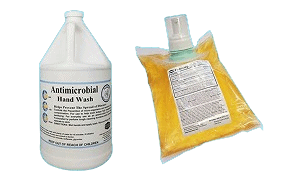
Restrooms should receive the closest attention. Stock commercial paper towels or tissue compatible with the installed dispensers, foam hand soap, hand sanitizer where appropriate, and sanitary seat covers if your facility provides them. A dispenser that jams or runs empty creates an immediate negative impression for tenants, customers, and employees. In high-traffic Miami-Dade properties, touchless dispensers can also reduce contact points and give maintenance teams better control over refill usage.
Cleaning chemicals should be chosen by task, not by convenience. A neutral cleaner is a practical choice for many hard surfaces and routine floor work. Glass cleaner supports entry doors, mirrors, and interior glass. Restroom cleaner handles soap residue and mineral buildup. Disinfectants should be used on the surfaces and contact times listed on their labels, particularly for high-touch points such as door handles, elevator buttons, faucets, and shared equipment.
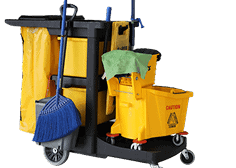
Cleaning teams also need an organized set of application tools. Color-coded microfiber cloths help prevent cross-contamination between restrooms, break rooms, offices, and general areas. Mop frames, mop heads, buckets or flat-mop systems, spray bottles with clear labels, scrub pads, dusters, brooms, and vacuums cover most routine work. The exact mix depends on the building: a medical office has different needs than a Broward warehouse with concrete floors and loading dock dust.
Waste collection is another daily requirement that should never be treated as an afterthought. Can liners must match the container size, waste type, and expected load. A liner that is too thin tears, slows the crew, and can create a sanitation issue. A liner that is oversized wastes material and money. Selecting the right gauge and dimensions for office trash, restroom waste, food-service waste, or heavier warehouse debris makes a measurable difference over a year.
Floor Care Supplies Should Match the Facility
Floors are one of the largest cleaning expenses because they take labor, absorb wear, and influence how visitors judge a property. The wrong chemical or pad can dull a floor finish, leave slippery residue, or shorten the life of the surface.
For routine hard-floor care, cleaning companies generally need a neutral floor cleaner, wet-floor signs, mop equipment, and the correct pads for the machine or floor type. Carpeted offices may need vacuum bags or filters, spot remover, extraction solution, and a plan for periodic deep cleaning. Warehouses and manufacturing facilities may require a degreaser, auto-scrubber chemicals, heavier-duty pads, and equipment capable of handling larger square footage.
In South Florida, entryways deserve special planning. Rain, sand, and moisture get tracked inside quickly, especially during summer storms and hurricane season. Walk-off mats, absorbent mop heads, and visible caution signs reduce slip hazards while protecting interior flooring. This is both a presentation issue and an OSHA-minded safety practice. A clean floor is not enough if it is left wet without proper warning.
Safety and PPE Are Core Supplies, Not Extras
Commercial cleaning means workers are handling chemicals, bodily-fluid risks, wet floors, and sometimes sharp or contaminated trash. A responsible supply plan includes personal protective equipment and clear safety procedures from the beginning.
At a minimum, keep appropriate disposable gloves, protective eyewear for chemical mixing or splash-risk tasks, masks when the task or facility policy calls for them, and safety signs readily available. Chemical-resistant gloves may be needed for stronger degreasers or disinfectants, while basic disposable gloves may be sufficient for light restroom servicing. Read the product label and safety data information before deciding what staff need.
Every chemical should remain in its original labeled container unless it is transferred into a properly labeled secondary bottle. Staff should never mix chemicals, particularly bleach-based products with acids or ammonia-containing cleaners. This is a safety requirement that can prevent serious respiratory injuries, and it matters in enclosed restrooms, janitor closets, and poorly ventilated back-of-house areas.
For facilities that use concentrated chemicals, dilution control is worth considering. Ready-to-use products reduce training complexity, while concentrates can lower storage needs and cost per use. The trade-off is that concentrates require accurate dispensing and training. For a small office, ready-to-use may be the more practical option. For a large Miami commercial property with multiple daily shifts, a controlled dilution system may provide better consistency.
Odor Control Requires More Than Fragrance
Humidity makes odor control a persistent concern in Miami and throughout South Florida. Restrooms, trash rooms, kitchens, locker areas, and mop closets can develop odors quickly when moisture, organic waste, and limited airflow come together. Air freshener alone often masks the problem for a short time without addressing its source.
Cleaning companies need odor-control products that fit the location. Restrooms may benefit from deodorizing urinal screens, drain treatment, and dispenser-based odor-control systems. Trash rooms may need stronger deodorizing products and liners designed to contain leaks. Mop heads and cleaning cloths must be laundered or replaced on schedule because dirty tools can spread odors back into the building.
It also helps to inspect the basics: overflowing trash, slow drains, damp mats, leaking liners, and uncleaned floor drains are common causes. If the source remains, adding more fragrance only makes the area smell like fragrance mixed with the original problem.
Build a Supply Room That Supports the Crew
The supply room should make correct work easier. Keep products grouped by function, label shelves, store chemicals below eye level, and separate chemicals from paper goods and food-related items. Maintain a simple par-level system: decide the minimum quantity needed for normal operations, then reorder before inventory reaches that point.
A practical commercial cleaning inventory usually includes these core categories:
- Restroom paper products, foam soap, sanitizer refills, dispensers, and odor-control products
- Disinfectants, neutral cleaners, glass cleaner, restroom cleaner, degreaser, and properly labeled spray bottles
- Microfiber cloths, mops, buckets, brooms, dusters, scrub pads, vacuums, and floor-care accessories
- Can liners sized for each waste stream, plus waste receptacle accessories where needed
- Gloves, eyewear, wet-floor signs, spill-response materials, and other OSHA-conscious safety supplies
The quantities should reflect traffic patterns, not guesswork. A lobby restroom used by visitors all day consumes supplies differently than an employee-only restroom. A property with weekend events needs additional stock before Friday, not an emergency delivery on Saturday. Reviewing consumption monthly lets managers spot overuse, dispenser problems, or a product specification that needs adjustment.
Choose Reliability Over Random Substitutions
Purchasing on price alone can create operational problems. Low-quality paper towels may require guests to take more sheets. Weak can liners lead to double-bagging. Incompatible soap refills can damage dispensers or leave them unusable. An unfamiliar disinfectant may require different dwell times and retraining.
For Miami-Dade and Broward facilities, a dependable local supply partner can help standardize products across properties, identify compatible replacements, and keep essential items available when demand changes. This is especially valuable before hurricane season, when facilities may need extra liners, paper products, sanitizer, disinfectants, and cleanup supplies on hand.
If you are reviewing your cleaning inventory, contact Victor R. Feria for a free facility supply consultation. The right supply plan gives your crew fewer workarounds, your building better protection, and your occupants a cleaner experience every day.
Need help choosing the right supplies?
VICTOR FERIA helps Miami-Dade and Broward businesses choose the right janitorial, paper, hygiene, chemical, disinfectant, glove, and safety products.
Request a Free Supply ReviewRelated resources for Miami-Dade and Broward businesses
Facility Supply FAQ
What is included in a Free Supply Review?
A review of current products, usage, waste, safety needs, reorder issues, and product-fit recommendations.
Do you serve both Miami-Dade and Broward?
Yes. VICTOR FERIA serves businesses across Miami-Dade and Broward with janitorial, paper, hygiene, chemical, glove, and safety supply recommendations.
Can you help choose paper products, disinfectants, gloves, or safety supplies?
Yes. Recommendations are based on the facility, task, traffic level, staff needs, and budget.
How do I ask for help?
Use the Free Supply Review button or contact VICTOR FERIA through the Contact Us page.