A spill rarely happens at a convenient time. It happens during a lunch rush, between patient appointments, while a forklift is moving, or right after a floor has been cleaned and reopened. That is exactly why a workplace spill response guide matters. When the response is clear, your team moves faster, protects people first, and avoids turning a small incident into an injury, shutdown, or compliance problem.
For office managers, warehouse supervisors, property teams, and cleaning contractors in Miami-Dade and Broward, spill response is not just a housekeeping issue. It is part of workplace safety, risk control, and operational continuity. The right approach depends on what spilled, where it landed, who is nearby, and whether your staff is trained and equipped to handle it.
What a workplace spill response guide should actually do
A useful guide should do more than tell employees to clean up quickly. It should help them make the first decisions correctly. That starts with identifying the spill, isolating the area, choosing proper personal protective equipment, using the right absorbent or cleanup material, and disposing of waste according to the situation.
This is where many facilities run into trouble. A general-purpose towel or mop may be fine for water near a restroom sink, but it may be the wrong choice for oil in a warehouse aisle or a chemical splash in a maintenance area. One-size-fits-all response plans usually look good on paper and fail in real conditions.
A practical guide also defines who handles what. Some spills can be managed in-house by trained personnel. Others should trigger escalation to a supervisor, safety lead, or outside emergency response. If your employees are expected to react, they need more than good intentions. They need a documented process and the right supplies within reach.
First response: protect people before the mess
The first job is not cleanup. It is hazard control. If someone can slip, inhale fumes, track contamination, or come into skin contact, the area needs to be secured immediately. That often means placing wet floor signs, cones, or temporary barricades around the spill before anyone reaches for absorbents.
In busy facilities, especially medical offices, restaurants, and commercial buildings, foot traffic is the real multiplier. A small spill near an entrance, break room, or corridor can spread within minutes. In warehouse settings, vehicle movement raises the stakes even more. A liquid spill in a forklift path is not just a cleaning issue. It can become a traction and visibility problem fast.
Once the area is controlled, the next question is simple: what is the substance? Water, coffee, body fluid, grease, solvent, cleaning chemical, and unknown liquid all require different decisions. If the spill cannot be identified quickly, treat it with caution and escalate rather than guessing.
Assess the spill before assigning the job
Every facility should train staff to ask a few basic questions. Is the material hazardous? Is there broken glass or another sharp involved? Is ventilation needed? Has the spill reached a drain, porous surface, or public area? Was anyone exposed?
That assessment does not need to be complicated, but it does need to happen in the right order. Too many teams jump straight into cleanup because they want the area back in service. Speed matters, but accuracy matters first.
Matching the response to the spill type
A better workplace spill response guide separates common spill categories instead of treating them the same.
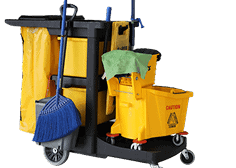
For water-based spills, the focus is usually slip prevention and fast drying. Absorbent pads, mops, and signage may be enough if the liquid is clean and the area is low risk. For oils and lubricants, especially in industrial or automotive-related environments, you need absorbents designed to pick up hydrocarbons without falling apart or smearing residue across the floor.
Chemical spills are where product choice and training make a real difference. Some chemicals require neutralizing agents, chemical-resistant gloves, or specific disposal steps. Others should not be handled by general staff at all. In medical, dental, and janitorial settings, bodily fluid response has its own requirements around PPE, disinfectants, containment, and waste handling.
The trade-off is straightforward. Stocking a wider range of spill response products costs more upfront, but relying on general cleanup materials for every incident usually costs more over time through wasted product, slower response, damaged surfaces, and avoidable safety exposure.
Spill kits are only useful if they fit the site
Many businesses buy a spill kit to check a box and then forget about it. Months later, the kit is incomplete, stored too far from the risk area, or filled with products that do not match the actual spills happening on site.
A good setup reflects the facility. An office building may need compact kits for break rooms, restrooms, and janitorial closets. A restaurant may need faster access near kitchens, dishwashing stations, and grease-prone back-of-house areas. A warehouse or workshop may need larger kits near loading zones, maintenance areas, and fluid storage points.
This is where local, hands-on guidance matters. In South Florida facilities, heat, humidity, and heavy traffic can affect storage conditions and cleanup speed. Products that work fine in a small office may not hold up in a busy industrial space. The right recommendation is usually based on what your staff sees every week, not what looks complete in a generic catalog.
Training matters more than most facilities think
Even the best spill supplies will underperform if the team is unsure when and how to use them. Training does not need to be long or complicated, but it should be specific to the building, the operation, and the likely spill types.
For example, cleaning staff may already understand general floor safety but still need guidance on chemical segregation or disposal. Front office teams may only need to know how to isolate an area and call the right person. Warehouse leads may need stronger training on absorbents, traffic control, and reporting procedures after fluid leaks.
The goal is not to turn every employee into a hazmat responder. The goal is to remove hesitation and bad improvisation. When people know the boundaries of their role, they respond with more confidence and fewer mistakes.
Documentation is part of response
A spill is cleaned up in minutes, but the operational impact can last longer if there is no record of what happened. Documentation helps identify patterns, confirm whether training worked, and show that your facility followed procedure.
That matters for internal safety reviews, insurance questions, and regulatory expectations. If the same kind of spill keeps happening in the same area, the issue may not be response at all. It may be poor storage, weak packaging, floor surface problems, or a process that needs to change.
Common gaps in spill preparedness
Most facilities do not fail because they ignored safety entirely. They fail because the response plan has small gaps that only show up during a real incident.
A few examples come up often. The kit is available, but nobody checks whether it is stocked. Signs are stored in a supply room instead of near high-risk areas. Staff know how to wipe up a spill but not how to dispose of contaminated absorbents. Managers assume the cleaning contractor handles everything, while the contractor assumes site staff will isolate the area first.
These are solvable issues, but they require a more operational mindset. Spill response should be treated like any other risk-control process. It needs ownership, placement, follow-up, and periodic review.
Building a spill response plan that works in real life
The strongest plans are simple enough to use under pressure. They identify likely spill risks by area, assign responsibility, define escalation rules, and standardize the supplies kept on hand. They also account for different shifts, because a well-run day team and an under-supported evening team may not respond the same way.
For many businesses, especially those managing multiple properties or departments, standardization helps. Consistent kit layouts, common signage, and clear response steps reduce confusion. At the same time, some customization is necessary. A dental office, office tower, and light industrial facility should not all be equipped the same way.
That is why consultative support tends to outperform trial and error. The best results usually come from matching the product and procedure to the site, then revisiting the setup after it has been in use. If your team has ever said, “We had supplies, but not the right ones,” your spill response plan needs attention.
A good workplace spill response guide should make cleanup faster, but its bigger job is reducing uncertainty. When the right supplies are placed where spills actually happen, and your team knows what to do first, safety improves, downtime drops, and decisions get easier. That kind of preparation pays for itself long before the next spill hits the floor.
Need help choosing the right supplies?
VICTOR FERIA helps Miami-Dade and Broward businesses choose the right janitorial, paper, hygiene, chemical, disinfectant, glove, and safety products.
Request a Free Supply ReviewRelated resources for Miami-Dade and Broward businesses
Facility Supply FAQ
What is included in a Free Supply Review?
A review of current products, usage, waste, safety needs, reorder issues, and product-fit recommendations.
Do you serve both Miami-Dade and Broward?
Yes. VICTOR FERIA serves businesses across Miami-Dade and Broward with janitorial, paper, hygiene, chemical, glove, and safety supply recommendations.
Can you help choose paper products, disinfectants, gloves, or safety supplies?
Yes. Recommendations are based on the facility, task, traffic level, staff needs, and budget.
How do I ask for help?
Use the Free Supply Review button or contact VICTOR FERIA through the Contact Us page.